
The Mirage of Technological Supremacy
War, Narrative, and the Politics of Perception in the U.S. Versus Iran Shadow Conflict
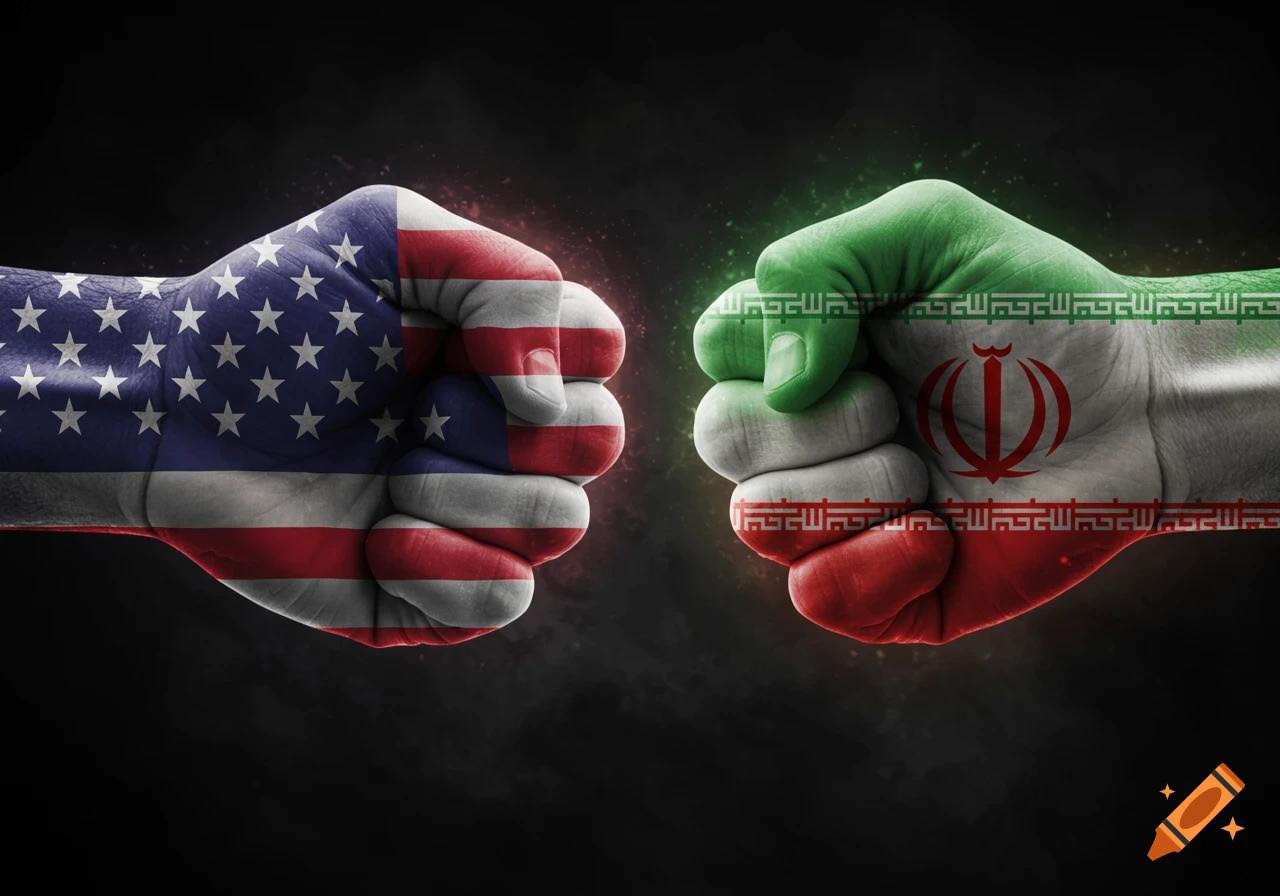
In the modern theatre of geopolitics, wars are no longer fought solely with missiles, aircraft, or covert operations; they are equally waged through narratives, perceptions, and strategic storytelling. Recent claims surrounding a failed U.S. bunker-buster strike inside Iran—and the alleged recovery of advanced ordnance illustrates how quickly information, speculation, and psychological signaling can converge into a potent geopolitical force.
At first glance, the account is compelling: a highly sophisticated munition reportedly fails to detonate deep underground, only to be retrieved intact and subjected to reverse engineering. If accurate in full technical scope, such an event would imply a serious lapse in operational reliability and potentially alter perceptions of military balance. Yet a disciplined, intelligence-grade assessment requires careful separation of verifiable capability from strategic narrative.
The Nature of Modern Military Claims
Advanced deep-penetration munitions are engineered with layered safeguards, including mechanisms intended to prevent unauthorized recovery. The likelihood of multiple systems failing in identical fashion, remaining intact, and being recoverable without detonation raises legitimate technical questions. Historically, major military powers design such systems precisely to avoid sensitive technology being captured in usable form.
This does not preclude the possibility of failure. In combat environments, mechanical anomalies, software limitations, or delivery miscalculations can occur. However, the progression from isolated malfunction to intact recovery and successful technological replication represents a significant escalation in claims—one that often reflects the influence of strategic messaging environments.
Information Warfare and Strategic Signaling
Modern conflicts are as much cognitive as they are kinetic. States frequently shape narratives to influence perception, morale, and negotiation leverage. Claims of technological capture or adversary failure typically serve several functions: Reinforcing domestic confidence and political stability, Signaling deterrence capability to adversaries, Enhancing diplomatic positioning through perceived strength.
For Iran, projecting technological capability whether through missile systems, drone capabilities, or alleged reverse engineering helps offset years of sanctions and military pressure. For the United States, preserving the credibility of technological superiority remains central to alliance assurance and deterrence frameworks.
The Reality of Reverse Engineering
Reverse engineering complex military systems is neither unprecedented nor immediate. Even partial recovery of hardware requires: A deep industrial and materials science base, Access to specialized manufacturing ecosystems, Extended testing, validation, and development cycles.
Countries such as China and Russia have demonstrated such capabilities over long time horizons, often through gradual advancement rather than instant replication. While Iran has shown measurable progress in certain defense technologies, transforming a single recovered system into a scalable, operational capability would demand substantial time, infrastructure, and resilience against external constraints.
Energy Markets: The Immediate Battlefield
Beyond technological narratives, the most immediate and measurable impact of such tensions is visible in global energy markets. Even the perception of escalation whether driven by events or rhetoric introduces volatility into oil pricing.
The underlying dynamics are clear: The Middle East remains central to global energy supply, Strategic chokepoints such as the Strait of Hormuz amplify risk sensitivity, Markets respond not only to actual disruption but to anticipated instability
As a result, oil prices rise not only because of conflict, but because of the possibility of conflict. This creates cascading effects across inflation, supply chains, and currency stability particularly for import-dependent economies.
The Broader Strategic Equation
This episode, whether grounded in fact, amplification, or strategic framing, highlights a deeper structural reality: modern power is shaped by the intersection of three domains: Technology, the capacity to innovate, secure, and adapt. Narrative, the ability to shape perception and strategic belief. Energy flows, control over the arteries of the global economy
No single incident can decisively alter the global military hierarchy. However, sustained narrative shaping can gradually influence perception—and perception itself is a form of power.
Conclusion: Between Reality and Projection
The account of a failed strike and recovered technology occupies a space between possibility and projection. Serious analysis requires neither outright dismissal nor uncritical acceptance, but calibrated skepticism grounded in technical understanding and geopolitical context.
What remains clear is that contemporary conflict extends beyond physical battlefields into perception, markets, and global confidence. In this expanded arena, the interpretation of events can be as consequential as the events themselves.
Lawful and Responsible Disclaimer
This article is an independent analytical commentary based on publicly available information, open-source reporting, and general strategic assessment. Certain claims referenced herein remain unverified and may reflect evolving or contested narratives. The analysis does not constitute official intelligence, policy guidance, or investment advice. Geopolitical and market conditions are inherently dynamic, and actual outcomes may differ materially from the perspectives discussed. Readers are encouraged to consult official sources, verified reports, and professional advisors before forming conclusions or making strategic, financial, or policy decisions.
(The writer is a banker)
