
A thought on contemporary Bangla music
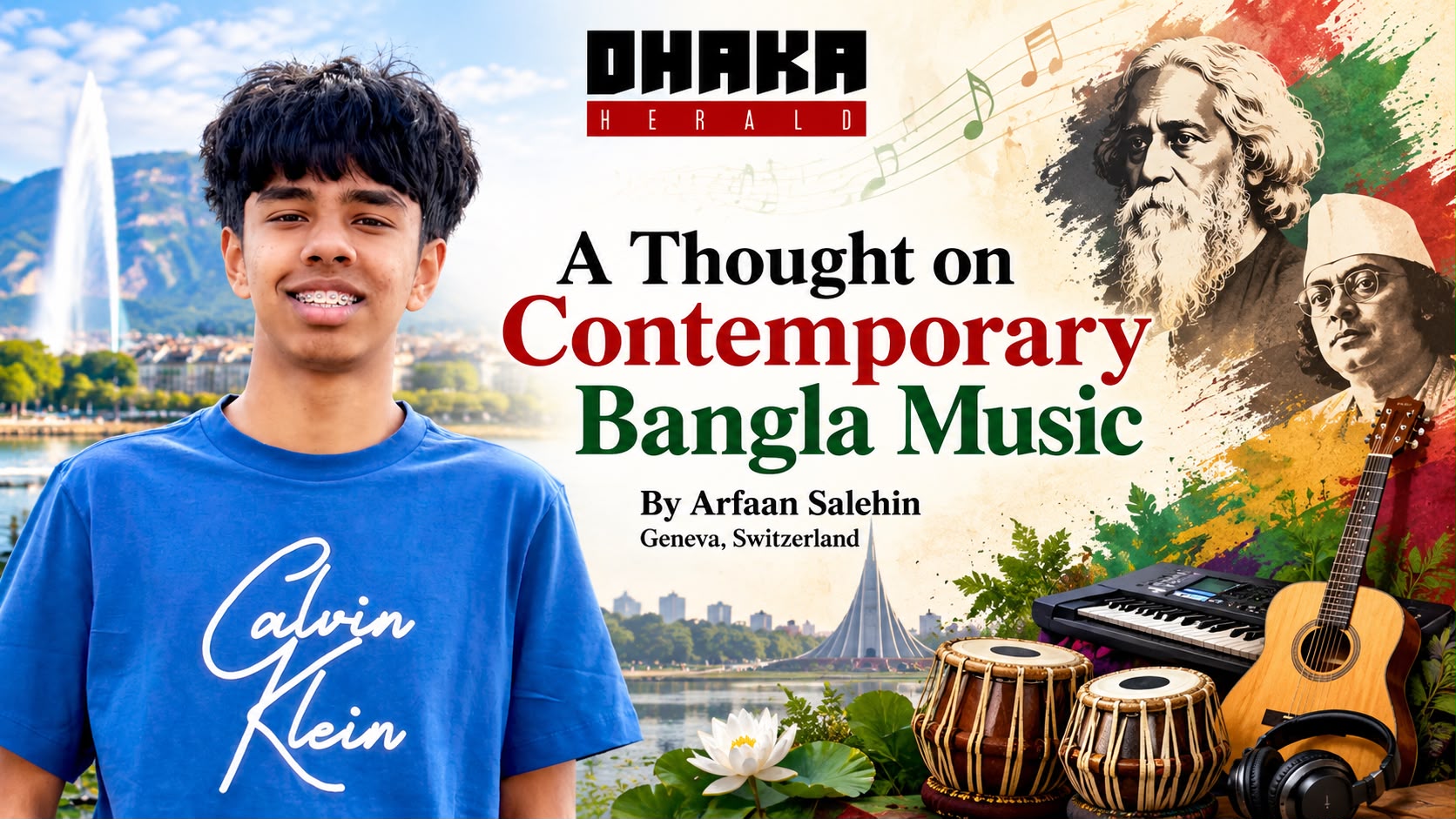
As I began exploring Bangla music more deeply, I discovered its remarkable diversity, from folk and classical traditions to Rabindra Sangeet, Nazrul Sangeet, film songs and contemporary pop. I also came to realise that the term ‘modern Bangla music’ can have different meanings. Historically, ‘modern Bangla songs’ refers to a broad musical tradition that developed long before today’s electronic pop.
Banglapedia traces its origins to the nineteenth century and associates its development with composers and poets such as Rabindranath Tagore, Dwijendralal Roy, Rajanikanta Sen, Atulprasad Sen and Kazi Nazrul Islam. Contemporary Bangla music, however, commonly refers to the pop, rock, fusion and digitally produced songs heard today.
It is this contemporary, heavily produced style, particularly electronic remixes of older songs, that is my least favourite form of Bangla music. I understand that it is popular with many listeners and has become an important part of present day Bangladeshi culture. Nevertheless, I do not enjoy it as much as traditional or older styles. My reasons include the use of processed vocals, electronic sounds, fast rhythms and, most importantly, the way some older Bangla songs are transformed into remixes and mashups.
One of the main features I sometimes dislike is the vocal style used in certain contemporary songs. Digital tools such as pitch correction, vocal layering and other studio effects are now common in music production throughout the world. These techniques can make a recording sound polished and can also be used creatively. However, when they are used too heavily, I feel that the singer’s voice can lose some of its natural character.
I prefer voices that sound expressive and recognisably human. A small imperfection can sometimes communicate emotion more effectively than a perfectly processed note. When a singer’s natural tone is covered by too many effects, it can become harder for me to connect with the emotions of the song. At other times, the vocal delivery may not suit the lyrics or mood, leaving the words and music feeling disconnected.
Another reason for my preference is rhythm. Many contemporary Bangla pop songs use fast tempos, strong bass lines and dance-oriented electronic beats. These qualities can work extremely well at concerts, celebrations and social events. They can make a song energetic, exciting and immediately memorable. Yet I often find such arrangements too loud or repetitive, particularly when the beat dominates the melody.
I prefer music that gives the melody, lyrics and voice enough space to breathe. Slower or more naturally flowing rhythms allow me to notice subtle changes in the tune and understand the emotions behind the words. A fast beat is not necessarily a weakness, but it can change the character of a song, especially when added to an older composition that was originally reflective, gentle or emotionally complex.
The instruments and sounds used in contemporary production also shape my opinion. Electronic keyboards, programmed drums, synthesisers, sampling and computer-generated effects offer musicians an enormous range of creative possibilities. They have helped artists experiment across genres and reach new audiences. Banglapedia notes that technological developments and electric instruments have contributed to greater variety in Bangladeshi music.
Even so, I sometimes feel that electronic effects overpower the underlying composition. Instead of supporting the melody and vocals, they can become the most noticeable part of the recording. As someone who plays the piano, tabla and guitar, I particularly enjoy hearing how individual musicians respond to one another. Acoustic instruments often contain small variations in timing, tone and intensity, and these details can give a performance its personality. When every sound is heavily programmed or edited, some of that human quality may disappear.
Habib Wahid is an important example of how Bangla music has evolved through fusion. He is widely recognised as a Bangladeshi singer, composer and music producer who combines folk influences with contemporary pop and electronic sounds. His 2003 album Krishno, featuring vocalist Kaya, helped introduce a distinctive mixture of Bangladeshi folk melodies and modern production to a new generation. The Daily Star has described him as a ‘king of fusion’ because of his combination of folk and techno elements.
Although his style includes some of the electronic production choices that I do not personally prefer, his contribution deserves recognition. He has helped revive interest in folk melodies among younger audiences and demonstrated that Bangla music can adapt to new technologies and international influences. His work also shows why contemporary fusion appeals to so many listeners. My response to his music is therefore a matter of taste rather than a judgement of his ability or importance as an artist.
My strongest concern is with certain remixes and mashups of older Bangla songs. Remaking an older song can introduce it to listeners who might never discover the original. A thoughtful reinterpretation can also reveal a new emotional dimension while respecting the composition’s identity. Musical traditions have always evolved through performance and reinterpretation, so change itself is not the problem.
The difficulty arises when a remix pays more attention to creating an energetic beat than to understanding the original song. A composition created with a particular melody, rhythm, vocal style and emotional atmosphere can feel completely different when it is given a fast electronic arrangement. Although the words and basic melody may remain, the experience of listening to the song can change dramatically.
I find this especially noticeable in some remixes of Rabindra Sangeet. Rabindranath Tagore’s songs bring together poetry, melody and emotion in a carefully constructed form. They also draw upon several musical influences, including classical and folk traditions. Because the relationship between words and music is so important, changing the tempo, phrasing or mood can affect how the meaning is understood.
This does not mean that Tagore’s songs should never be interpreted in new ways. Every generation should be able to engage with cultural heritage creatively. However, innovation works best when it begins with knowledge and respect. A successful reinterpretation should understand what gives the original composition its emotional power before introducing new instruments or production methods.
Mashups can create a different problem. When several older songs are combined, frequent changes in lyrics, rhythm, melody and harmony can interrupt the natural flow of each composition. The listener may recognise familiar sections, but there may not be enough time to experience the full emotional journey of any one song. For some people, this rapid movement is entertaining. For me, it can feel disorienting.
At the same time, I understand why contemporary Bangla music has become so popular. It fits naturally into concerts, parties, films, streaming platforms and short videos on social media. Strong beats and memorable hooks can capture attention quickly. Digital production also allows young musicians to experiment, collaborate across borders and share their work with audiences around the world.
Bangladesh itself has never had only one musical identity. Its music has grown through the meeting of classical, folk, devotional, regional, literary and international influences. Contemporary pop and fusion are part of that continuing evolution. Even when I do not enjoy a particular style, I recognise its place in the wider musical landscape.
Musical taste is deeply personal. A sound that seems overly processed to me may feel innovative to someone else. A remix that I believe loses the emotion of the original may help another young listener discover Tagore or Bengali folk music for the first time. These different responses do not make one listener correct and the other wrong. They show how music can mean different things to different people.
Overall, contemporary Bangla pop remains my least favourite area of Bangla music because I prefer natural voices, acoustic instruments, slower melodies and arrangements that preserve the emotional character of a composition. This does not mean that contemporary music is bad or that musicians should stop experimenting. Innovation is necessary for every musical tradition to remain alive.
For me, however, experimentation is most meaningful when technology supports the song instead of overwhelming it. The music I enjoy most is music in which the lyrics, melody, voice and instruments work together as parts of one emotional expression. That sense of balance is what draws me towards traditional and older Bangla music, and what I hope to hear more often in the music of the future.
[Arfaan Salehin is a 14-year-old Year 10 student at the International School of Geneva, Switzerland, where he follows the International Baccalaureate curriculum. A passionate and curious learner, he has a keen interest in music, sports and writing. His love of music began in early childhood and grew through his exploration of musical traditions from different cultures. He plays the piano, tabla and guitar. Beyond music, Arfaan enjoys playing basketball and occasionally shares his thoughts and experiences through his personal blog and contributions to his school magazine.
Music has been an important part of my life for as long as I can remember. Through listening, learning and playing different instruments, I have gradually developed a deep appreciation for Bangla music. Its melodies, rhythms, instruments and expressive singing often give me a strong sense of warmth and cultural connection].
