
Nearly 78% of Bangladesh’s brick kilns lack environmental clearance despite court order
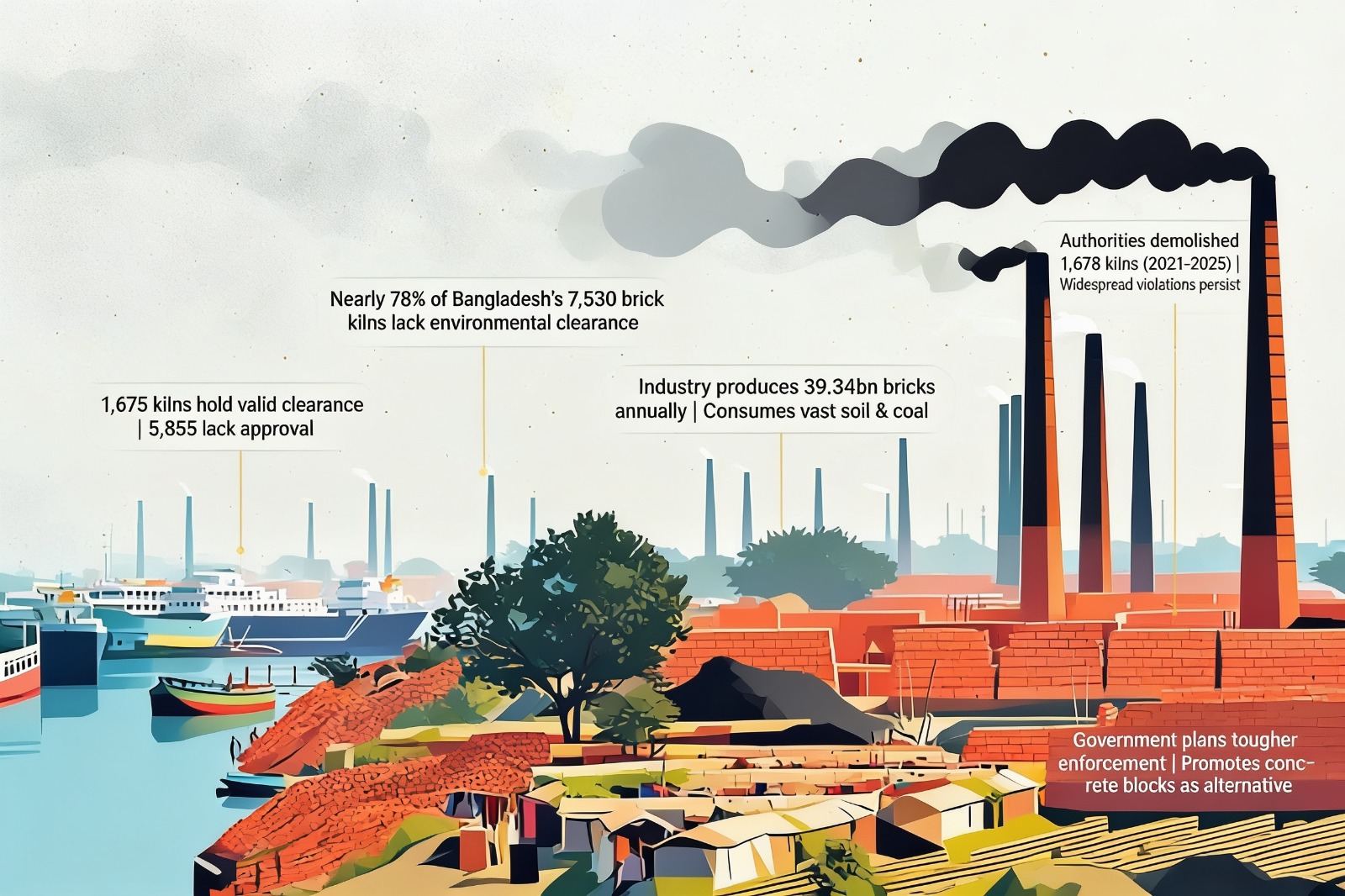
More than 5,800 kilns operate without valid environmental clearance or renewal, threatening public health, farmland and air quality.
Nearly 78% of Bangladesh’s 7,530 brick kilns lack environmental clearance or renewal, despite a High Court order to shut illegal operations, according to a government policy document obtained by the newspaper the daily Morning bell .
The Department of Environment’s figures show that only 1,675 kilns hold valid clearance, while 5,855 operate without it. Even among 6,406 zigzag kilns, the country’s most common technology, 4,781 lack approval.
The consequences extend beyond air pollution. In Dohar, near Dhaka, at least six kilns operate within 500 to 800 metres of a madrasa attended by hundreds of students. Managers of two kilns acknowledged that they lacked environmental clearance, saying they were trying to obtain approval.
Bangladesh’s brick industry produces an estimated 39.34bn fired bricks annually, consuming about 150m tonnes of soil and 6m to 7m tonnes of coal. Removing topsoil for brickmaking damages farmland and reduces fertility, while smoke and dust can introduce toxic metals into the soil.
A policy paper citing research by the Bangladesh Agricultural Research Institute says crop yields within 1km of kilns can fall significantly. Rice yields may decline by 20–25%, wheat by 30–40%, mustard by 25–35% and vegetables by 40–50%.
The legal restrictions are clear. Under the Brick Manufacturing and Brick Kiln Establishment (Control) Act, amended in 2019, kilns must maintain a distance of at least 1km from designated prohibited areas.
In November 2022, the High Court ordered the closure of illegal kilns across the country and directed that the use of wood as kiln fuel be stopped within seven days. Nearly four years later, widespread violations continue.
Environmental authorities carried out 2,208 mobile court operations between January 2021 and December 2025, imposing fines of Tk1.16bn, of which Tk1.08bn was collected. During that period, 1,678 kilns were demolished.
The Department of Environment says it has prepared a list of illegal kilns and plans tougher enforcement before the dry-season production period. Officials say operations will particularly target kilns using wood, drum chimneys and fixed chimneys.
The government has also promoted concrete blocks as an alternative to fired bricks. Bangladesh has 160 block factories producing about 210m blocks annually. Although government targets called for a complete transition to blocks in public construction by June 2025, progress remains incomplete.
The figures expose a persistent enforcement gap: despite court orders, penalties and demolition drives, thousands of unlicensed kilns continue operating, putting pressure on public health, agricultural productivity and environmental protection.
